

By Aisling Meath
Laura Whalen explains the idea behind the Babóg Project which is now being documented in a film
SOMETIMES the news seems so overwhelming that we are left at a loss as to how to react.
ADVERTISEMENT
Laura Whalen, a Courtmacsherry-based doll maker, is one such person, but she found a way to express how she felt.
Like many others Laura was very moved by the appalling details being uncovered about the babies who died in Irish Mother and Baby homes, including 796 dumped in a septic tank in Tuam, and more than 800 more unaccounted for at Bessborough in Cork.
A commission of inquiry found that more than 9,000 babies died in 18 investigated Irish Mother and Baby homes, tragically and shamefully, many of them left in unmarked graves.
In 2018 Laura, who lives with her partner, stone carver and sculptor Tommy Lysaught and their children, decided to use her skills as a doll maker to set up The Babóg Project as an act of remembrance for all those 9,000 little
babies lost.

The aim was to make a small, palm-sized doll – some crocheted, some knitted, some stitched - for each baby in order to acknowledge each one of them, and to emphasise that each of these infants were little human beings whose lives, albeit cut short, were deserving of our love, focus and attention.
“By making a doll for each child, taking the time out to do it, maybe sitting for three hours, we are collectively acknowledging that these babies existed, that they are important, and that they are worthy of our time and attention,” said Laura.
“A dear friend of mine had been born in a Mother and Baby institution, and when she told me her story, I offered to make her a tiny doll of herself to represent the little girl that she had been when she was adopted.
“From there I made dolls for her siblings who had also been born in Mother and Baby institutions, and my tears flowed for her little brother who died there at only five weeks old, and is buried in an
unmarked grave.
“I had already been making dolls for my own children and expanded into making bespoke dolls for both children and adults. We come in all shapes and sizes, some of us have disabilities, some of us have scars, we don’t all conform to the classic Barbie doll shape so I make ‘real life’ dolls.”
Laura explained how the Babóg project started out with a Facebook page and a couple of simple patterns, and took off from there.
“We asked people to make dolls and send them to us,” she explained. “Courtmacsherry Community Shop were wonderful and lent their address where people could post them to. One doll even came from Alaska. It arrived with a little white bear attached to its back as a travel companion to ‘mind it’ on its
journey.”
The dolls came from all over Europe and the UK, as the Irish diaspora responded in their droves. People also included notes, tender outpourings of their heartbreak.
“When we were in lockdown we were inundated with people’s creations,” recalled Laura. “Three women from Waterford found great solace making dolls together helping to alleviate their social isolation. They made over 1,000 dolls between them.
“We received over 12,000 dolls, way over our target, and we had a very moving day laying them all out on Courtmacsherry
beach.
“In early 2021 we launched a virtual exhibition consisting of images of every single doll that was sent to us, and snippets taken from the letters, cards and notes which accompanied them.”
Laura then took the decision to pause the Babóg project due to personal demands, but in 2024 she wanted to establish a “right ending” to the project.
“We decided to return the dolls to the homes and hearts of so many who would treasure them,” she explained. “They were like dandelion seeds blowing into the world. Before we began returning the dolls we held a single public event on May 31 last year at St Peter’s in Cork where we laid out all the 12,000 Babógs again. It was very moving.
“From June until the middle of July 2025 we literally received hundreds of requests for dolls coming from individuals and communities from the four corners of Ireland.
“Our postmaster John at Lislevane Post Office was amazing, giving up many lunch hours to process all of the parcels, and it took us six weeks to dispatch all the dolls. The images of where people kept the dolls and what they did with them are shared to our Facebook page.”
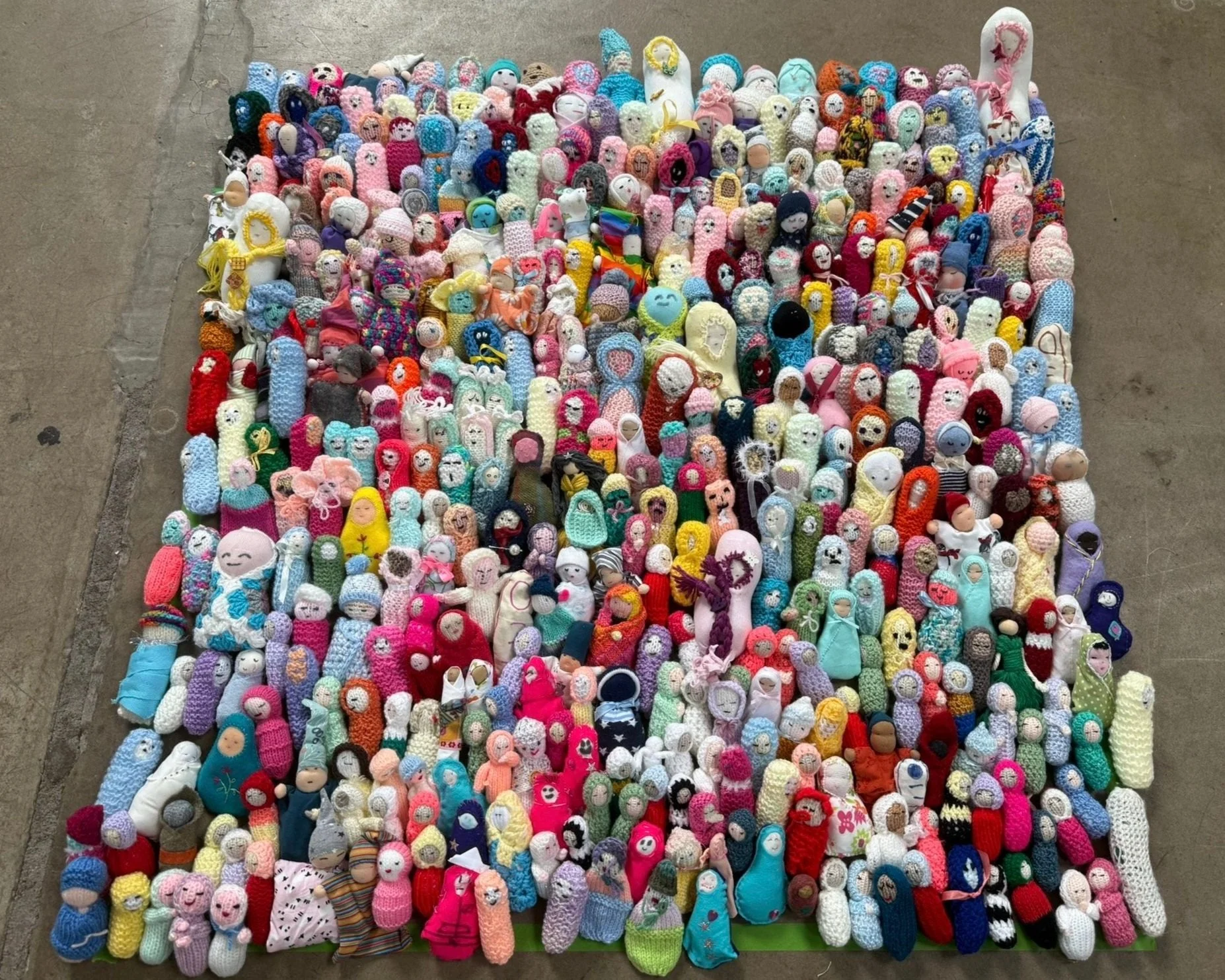
Laura’s hope is that these Babógs will eventually become heirlooms.
She said: “Many were created by grandmothers, mothers, and daughters all working together sharing stories. It’s important to allow space to share these stories because that is how we heal.
“Stories are often carried through fabrics. Women told of making dolls from the clothes of their own babies, and others who made dolls from fabric from outfits intended for babies who sadly did not survive.
“Only recently a group of five women walked from Tuam to Bessborough with their Babógs, and I encourage everyone to continue making them and pass them on through the generations in perpetual memory.”
Laura is now going on to train as a therapist, but the legacy of her work on the Babóg project lives on, and Nodlag Houlihan and Matt Leigh of Zucca films have been working hard to document the incredible story.
“We started working on the project in 2020 just after we first met Laura,” revealed producer Nodlag. “We were really inspired by meeting her and felt that the project was such a thoughtful and humane response to everything that was coming out at the time about the Mother and Baby institutions.
“We received development funding from Screen Ireland in 2020 allowing us to film the early stages of the project, and since then we have documented every stage.
“We got a heritage grant at the beginning of last summer from Cork County Council which enabled us to fund the first stage of the edit. We hope to interest a broadcaster to help us fund the remainder of the post-production and aim to complete the project in early 2027.”
An important piece of social history to look forward to.


