I SAY this every year, but summer does always seem to fly by. It feels like only a few weeks ago that we were welcoming spring flowers such as lesser celandines, snowdrops, and bluebells, and yet we have already seen the last of these, along with many summer floral sensations such as foxgloves, ragged robin, and yellow rattle, which have flowered and gone to seed. Juicy, ripe blackberries are once again a bittersweet sight. They are wonderful to harvest and enjoy, but they signal that the longest days of summer are behind us. With this in mind, there is a need to savour August’s botanical display before that too begins to fade. There are still plenty of wildflowers in bloom, and here are five familiar native species to seek out and enjoy before they disappear for the year.
Yarrow
Yarrow (Achillea millefolium) is a fragrant plant with dense white or pale pink flower heads. A hardy species, yarrow has a deep root system that can reach down as far as 20 centimetres, making it very drought resistant. It is commonly found in unmown lawns, grassland, roadsides, and waste ground.
ADVERTISEMENT
Bees and other pollinators are drawn to its flowers, which are usually present from June to November. It has a long history as a medicinal herb, and its Latin name refers to Achilles, the Greek warrior who is said to have used it to treat wounds. It is also known as carpenter’s weed, as it was reportedly used to stop bleeding caused by workplace injuries. Due to its clever chemical composition, cavity-nesting birds such as starlings will line their nests with yarrow to repel parasites.
Knapweed
My personal favourite late summer flower is common, or black, knapweed (Centaurea nigra). It is abundant in our garden and acts as a magnet for pollinators, including butterflies and bumblebees. Knapweed is recognised as one of the most valuable native sources of nectar and pollen for insects.
It resembles a thistle, but without the prickles, and has vibrant purple flower heads. The name comes from the Old Norse word knappr, meaning bud or knob, which describes the rounded flower head.
Knapweed supports more than just adult insects. The larvae of many beetles, moths, and flies also feed on it. With the influx of painted lady butterflies this year, we have seen their caterpillars feeding not only on thistles but also on the knapweed in our garden.
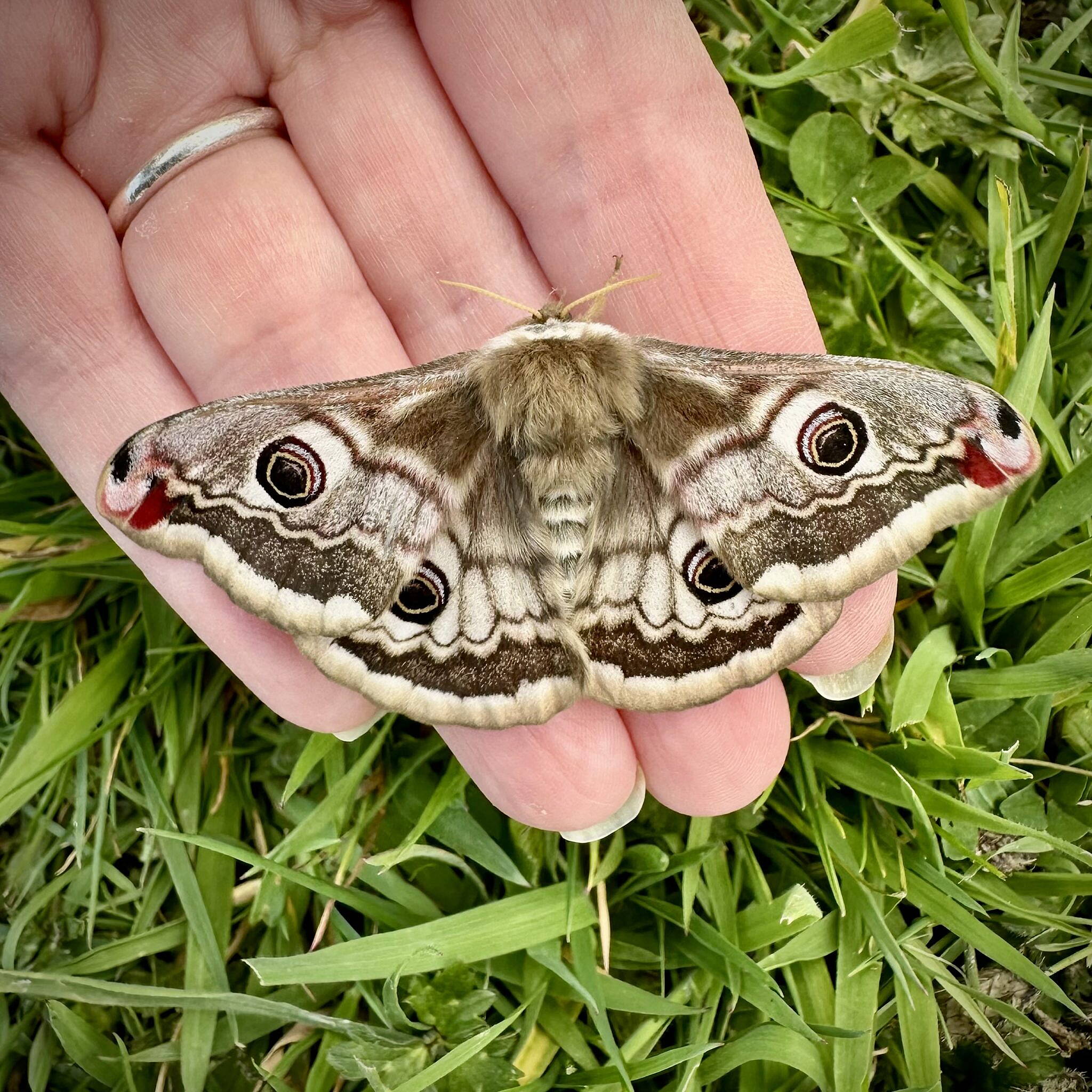 Heather is an important wildflower for the caterpillars of the the impressive emperor moth.
Heather
Several species of heather flower in August. Ling, Calluna vulgaris, and bell heather, Erica cinerea, are the most common. At this time of year, bogs and uplands take on their distinctive purple hue. Heathers have masses of tiny flowers on each plant, and this results in a strong attraction for pollinators. They provide an important food source for bees as they prepare for the months ahead and they are an important food plant for the caterpillars of the large and distinctive emperor moth.
Occasionally, heather can be found with white flowers. Folklore suggests that finding white heather brings good fortune. This belief is said to originate in Scotland, where the purple variety was thought to be stained with blood from battles, while the white form remained untouched and was therefore lucky. It is worth noting that cultivated white or non-native garden varieties may not carry the same charm. In the past, heather was widely used for bedding, brooms, fuel, baskets, thatching, and as forage for sheep.
Common ragwort
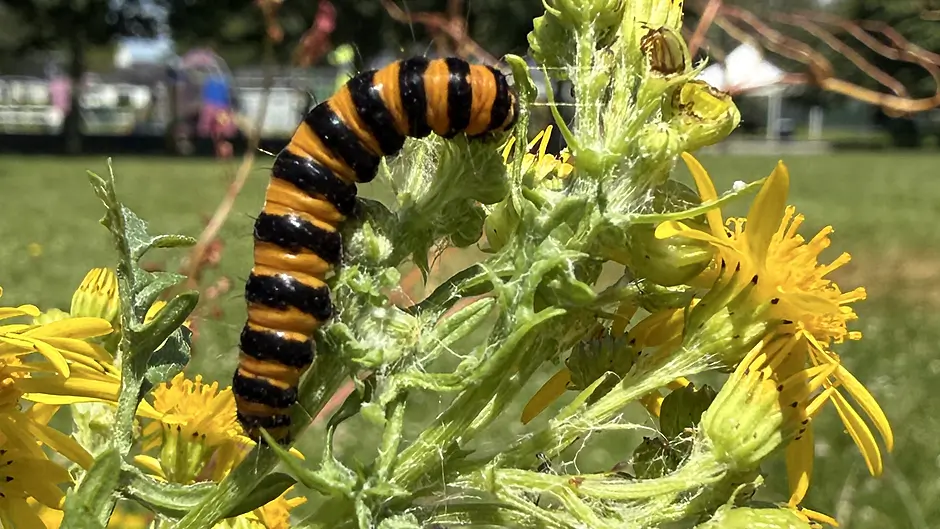
Common ragwort (Jacobaea vulgaris), or buachalán buí as Gaeilge, is a striking plant with bright yellow flowers. It is a familiar sight in fields and along hedgerows and deserves a closer look as it is the food plant of cinnabar moth caterpillars. In addition to this, it supports a wide range of insect life, 177 invertebrate species have been noted to feed from the plant, and, like knapweed, it is one of the top ten nectar-providing native plants. However, it is also a controversial species as it is toxic to grazing horses and cattle and is listed as a noxious weed under the 1936 Noxious Weeds Act. This allows the Department of Agriculture, Food and the Marine to issue notices requiring its removal where it occurs in excess.
Grazing animals will usually avoid ragwort, but if pasture is scarce or the plant becomes incorporated into hay or silage, the toxic compounds it contains can cause liver failure. Cinnabar caterpillars, however, use this to their advantage by storing the toxins in their bodies, making them unpalatable to predators. I find it hard to pass ragwort without stopping to check for these distinctive orange and black striped larvae.
Devil’s-bit scabious
Devil’s-bit scabious (Succisa pratensis) is slightly less common than the previous four species described here and may present more of a challenge to spot. It is typically found in unfertilised grassland, damp meadows, marshes, hedgerows, and along riverbanks, and is an indicator of habitats with high biodiversity value. It has attractive pale blue to purplish flowers held in compact heads around two centimetres in diameter. The stems can reach up to 100 centimetres in height.
This plant is particularly important as the food source for the caterpillars of the marsh fritillary butterfly, a species classified as vulnerable and Ireland’s only legally protected insect.
The name scabious comes from the Latin scabere, meaning to scratch, reflecting its traditional use in treating skin conditions. The common name refers to its short root, which appears to end abruptly, as if bitten off. According to legend, this was the work of the devil.
These are just five of the wildflowers still in bloom this August, make sure to enjoy them while they last.