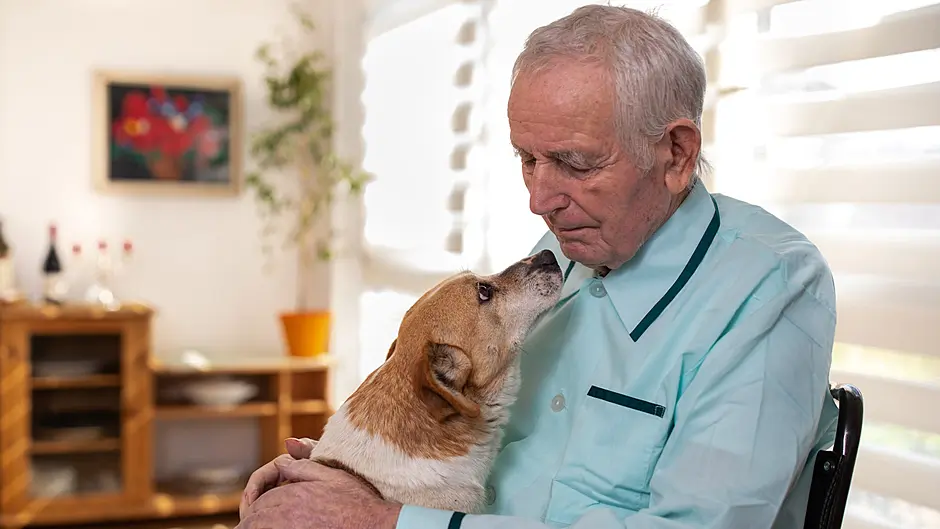

Dogs are loyal and fun to be around, but they’re much more than that. From reducing loneliness to slowing cognitive decline, recent research is confirming what dog lovers have always said – namely, that dogs can play an important role in improving mental health and well-being.
We know that in recent decades, the number of single-person households has increased significantly. In 2021, nearly 30 per cent of households in the UK and US were composed of people living alone. In Ireland, the 2022 census shows that 23 per cent of all households were single-person households. Almost 426,000 people in Ireland live on their own, a notable increase since the 2016 census.
ADVERTISEMENT
You can live on your own and not be lonely, just as you can be lonely in a busy household. Still, the trend towards more people living on their own does raise concerns about potential loneliness and its effects on mental and physical health. To give but one example, studies show that older people living alone face a greater risk of developing dementia.
Pet ownership, however, offers a glimmer of hope in this regard. Research confirms that owning a dog or cat significantly reduces feelings of loneliness.
For people living alone, this companionship may also slow age-related cognitive decline. Research shows that lonely people without pets experience a faster decline in verbal memory and fluency compared to those with pets. Essentially, for older people living on their own, the presence of a dog acts as a buffer against cognitive deterioration.
Meanwhile, a separate online survey of American dog owners revealed that 39 per cent reported improvements in emotional health simply from having a dog. Looking at the survey, 69 per cent said their dogs comforted them during sad times; 60 per cent found their dogs helped them cope with general stress; 45 per cent appreciated how their dogs ‘listened’ when they needed to vent.
Quite simply, dogs make people feel better, with the survey finding that dog owners reported their pets uplifted their mood nine times a day through playful behaviour (68 per cent), snuggling (67 per cent), or simply being a comforting presence (64 per cent).
Pet therapy
Remarkably, 61 per cent of respondents said time spent with their dog was the best part of their day. Additionally, more than a third of dog owners likened their pets to psychologists, highlighting how dogs lighten their moods and provide emotional support during challenging times.
Studies have also shown that interacting with dogs can lower levels of cortisol, the stress hormone.
Dogs can provide a calming presence and their playful nature can distract us from worries. Indeed, social interactions between people and their dogs actually boost oxytocin levels, the same happy hormone that strengthens the bond between mothers and their babies.
Dogs can be social catalysts, encouraging interactions with other dog owners during walks or at parks.
The sense of responsibility and purpose that comes with caring for a dog can also contribute to improved mood. Caring for a dog can give people a sense of accomplishment and boost their confidence.
And of course, the unconditional love and companionship provided by dogs can be very therapeutic. As the saying goes, ‘Be the person your dog thinks you are’.
The benefits of dog ownership aren’t limited to mental health. Many studies, including a 2013 report by the American Heart Association, confirm the physical health advantages of owning a dog. Dogs encourage us to get out and exercise more. Daily walks and playtime with our furry friends contribute to better physical and cardiovascular health, which in turn has a positive impact on mental well-being.
Of course, whatever the research says, individual experiences can vary. If you’re considering getting a dog, it’s always a good idea to do your research and make sure you’re prepared for the commitment. And if you’re an animal lover who is unable to own a dog, fostering or volunteering at shelters can also provide opportunities to experience the positive impact of having dogs in your life.
Practicalities aside, the science is increasingly supporting what dog lovers have long known: the bond with a dog is a powerful force for good, offering companionship, joy, and a unique form of emotional support.