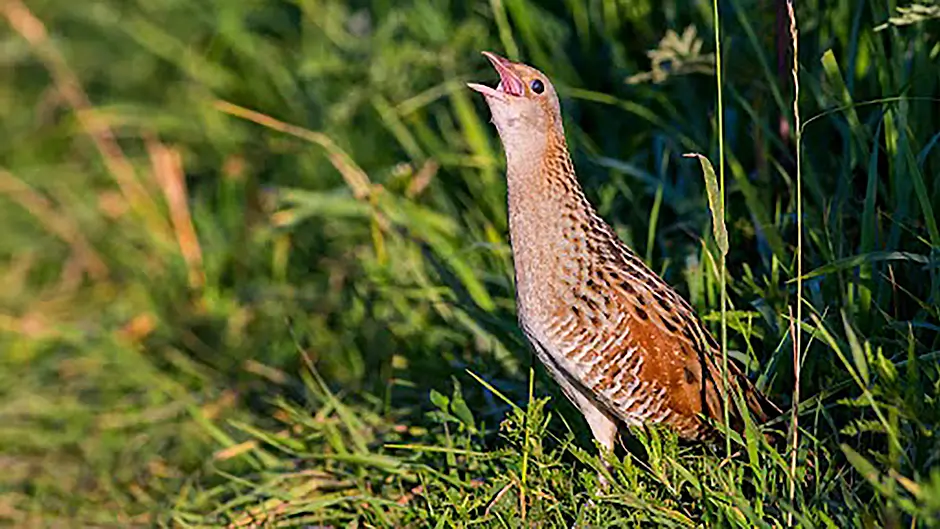
THE Corncrake has made a much welcome return to West Cork after an absence of several decades with a male spotted at Whites Marsh in Clonakilty.
Minister for Nature, Heritage and Biodiversity Christopher O’Sullivan confirmed that he recorded a male Corncrake at the 100-acre site which was purchased by the Government over a year ago.
‘Corncrakes are a bird that were once widespread throughout West Cork but for decades now they have been completely absent. Now for the first time in perhaps over 50 years or more we have a singing male in this area.’
ADVERTISEMENT
He added that because the male Corncrake was calling for more than five days in a row, it officially goes down as a breeding attempt.
‘The recovery power of nature is extraordinary. It just goes to show, build it and they will come.’
Minister O’Sullivan and Minister for Agriculture, Food and the Marine Martin Heydon TD have also announced a new €4.35m programme to protect the Corncrake.
Building on the many successes of the Corncrake LIFE project, this new initiative, the ‘Natura Communities for Birds’ programme will build capacity in communities to deliver nature conservation actions for farmland birds.
The programme will initially operate in nine key sites in Donegal, Mayo and Galway selected for the conservation of Corncrake and designated as Special Protection Areas but will also support the conservation of a broader range of bird species.
The Corncrake is listed on the Red List of Conservation Concern due to declining numbers in Ireland and Europe. Over the past five years, the Corncrake LIFE project contributed to a 55% increase in the national Corncrake population with almost 1,500 hectares of land in management agreements with landowners.
It is widely considered an exemplar of bird conservation projects and was warmly received by the local communities and landowners it worked with. The project was led by NPWS (National Parks and Wildlife Service (NPWS) in partnership with the Department of Agriculture, Food and the Marine, Fota Wildlife Park, Atlantic Technological University and Údarás na Gaeltachta.
Minister O’Sullivan said the Corncrake LIFE project has been an incredible successful and hopeful story of nature conservation in Ireland.
‘Through investment in conservation and working hand in hand with local communities, this most elusive bird and its unique call can be heard that bit louder every year in the meadows, farmlands and hayfields of the northwest. Last year saw the highest number of corncrake territories recorded in 25 years,’ said Minister O’Sullivan.
‘We need to support farmers and landowners who want to farm with nature and make sure that they are rewarded for the results they produce.’
Minister Heydon said the positive impact of the Corncrake LIFE project is heartening to see and is a testament to the conservation work that farmers are embracing on their land.
‘Collaboration and engagement are the underpinning success of the Corncrake LIFE project, from cross departmental to farmers and the wider community. This initiative brought all parties together with a conservation objective that delivered for all involved and is complemented by the ACRES Cooperation approach.’
The Natures Communities for Birds Programme will run for an initial three-year period and will focus on Corncrake conservation and habitat restoration, species monitoring and forge community partnerships and develop champions for bird conservation.