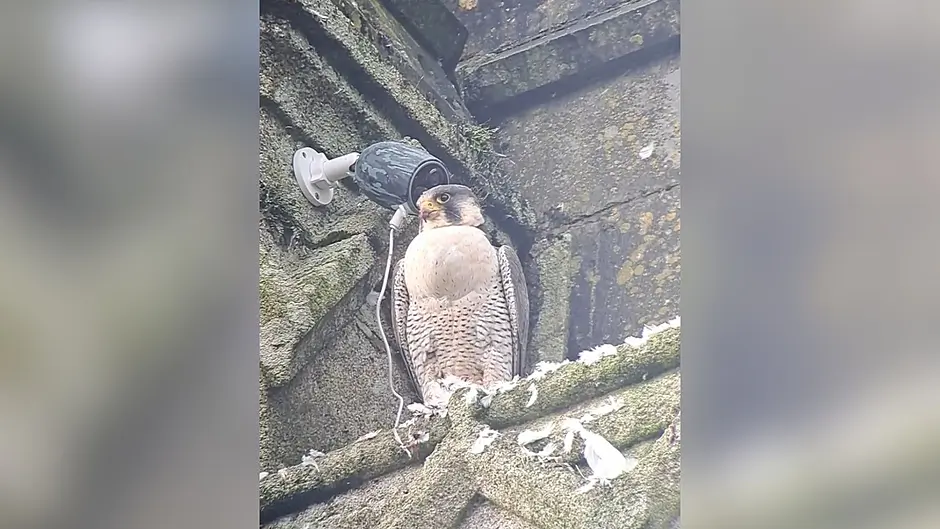
A VOLUNTEER on tidying duties at the Church of the Immaculate Conception in Clonakilty has confirmed the return of a peregrine falcon.
View this post on Instagram
Philip Joyce told The Southern Star that a pair of peregrine falcons began roosting in the church’s bell tower six years ago.
ADVERTISEMENT
“Needless to say, their presence attracted the attention of the National Parks and Wildlife Service, particularly that of Claire Deasy, who along with Alan McCarthy of the Board of Works, and Bird Watch Ireland, installed three cameras at what might have been their nesting site in December 2023,” said Philip.
“To my knowledge, no offspring resulted from that period and one of the pair, some years ago, unfortunately crashed into the church wall and died.”
Philip said he agreed to a request from the National Parks and Wildlife Service to keep an eye out for any evidence that the remaining falcon was in the vicinity.
On Sunday Philip found “much evidence” of what they were looking for – unfortunate bird victims in the grounds of the car park.
For months on end, Philip said there had been no shrieking emanating from the tower, so there were concerns that the last remaining falcon had died or left the area.
In addition to the cameras, which were installed under licence, the National Parks and Wildlife Service set up a Facebook page titled Clonakilty Peregrine Falcons with photographs and videos of them with their prey.
Philip kindly sent The Southern Star a ten-second video featuring the falcon’s shriek, which he recorded at 8am on Sunday morning.
He said the large crow-sized carnivorous predator is regarded by many as the fastest creature on our planet achieving speeds, in a diving stoop, of over 200km per hour.
“If lucky, they can live in the wild for the best part of 20 years,” he concluded.